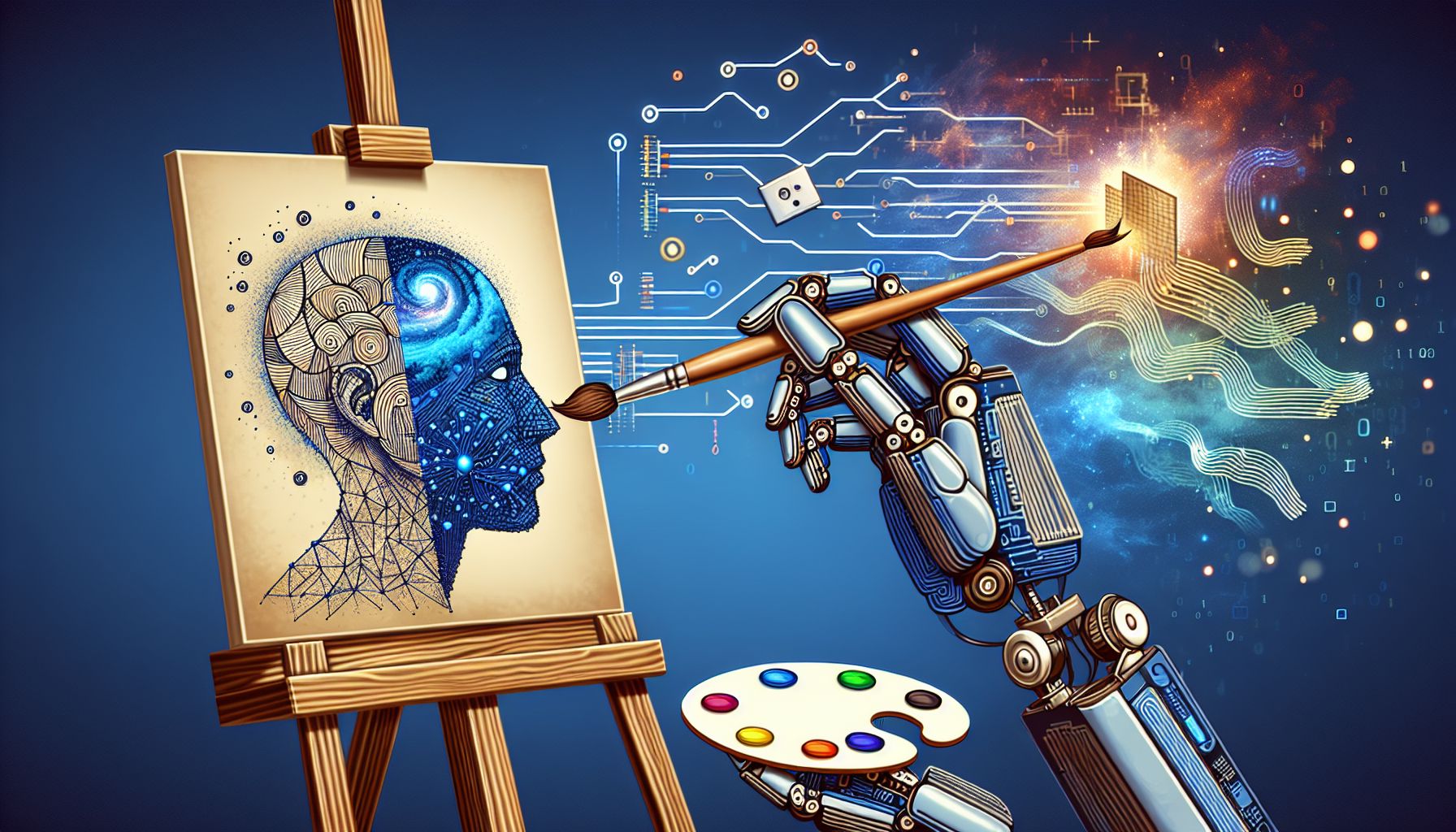
The Battle for Artistic Supremacy: Transformative Tech in the Age of the AI Artist
In a world where one packet of frozen peas hasn’t changed much in fifty years, the last half-decade’s progress in Artificial Intelligence (AI)-driven creatives—like writing and art—can be described as nothing less than meteoric. AI-generated art is sparking a new sense of collaboration, creativity, and “What do you mean a machine painted that?” And at the center of this shift? AI image generation platforms.
Today, let’s look at one piece of this puzzle: how AI is changing art by pushing us closer to a world where internet-based AIs from unknown servers go head-to-head against the masterpieces of Leonardo da Vinci or Claude Monet… okay, maybe not yet, but buckle up because it’s heading there faster than you can say “Van Gogh.” It’s the real human vs. machine showdown, powered by digital paintbrushes.
A Quick Look Back: Art Before AI
Before AI came along to revolutionize digital art, humans created our work on silk, stone and canvas in galleries or shared snapshots on social media. Pretty straightforward stuff.
Then digital tools changed everything. Photos got edited, pixels got manipulated, and suddenly everyone had access to powerful creative software. Artists started mixing traditional techniques with digital possibilities.
The art world had mixed reactions. Some embraced the new tools, while others worried about authenticity. Sound familiar? It’s the same debate we’re having about AI art today, just with different technology.
The Digital Art Revolution Begins
Digital art opened up new possibilities that traditional media couldn’t match. Artists could experiment endlessly, undo mistakes instantly, and create impossible colors and textures.
But it also raised questions. Was digitally altered work still “real” art? Where was the line between enhancement and creation?
Enter AI: Beyond Human Creativity?
Now we’re facing an even bigger shift. AI doesn’t just give artists new tools, it can create art independently. Feed it a prompt, and it generates original images in seconds.
This isn’t just about making art faster or easier. It’s about machines potentially matching or exceeding human creative abilities. That’s both exciting and unsettling.
“The question isn’t whether AI can make art, but whether we’re ready for what that means for human artists.”
Some artists are embracing AI as a collaborator. Others see it as a threat to their livelihood. Both perspectives make sense when you consider how quickly this technology is advancing.
What’s clear is that AI art isn’t going anywhere. The platforms keep improving, the results keep getting better, and more people are experimenting with them every day. We’re still figuring out what this means for the future of human creativity.
What Happens Next?
The art world is adapting, as it always has with new technology. Galleries are showcasing AI art, artists are finding ways to incorporate it into their practice, and audiences are learning to appreciate this new form of creativity.
Will AI replace human artists? Probably not entirely. But it’s definitely changing what it means to be an artist in the 21st century.