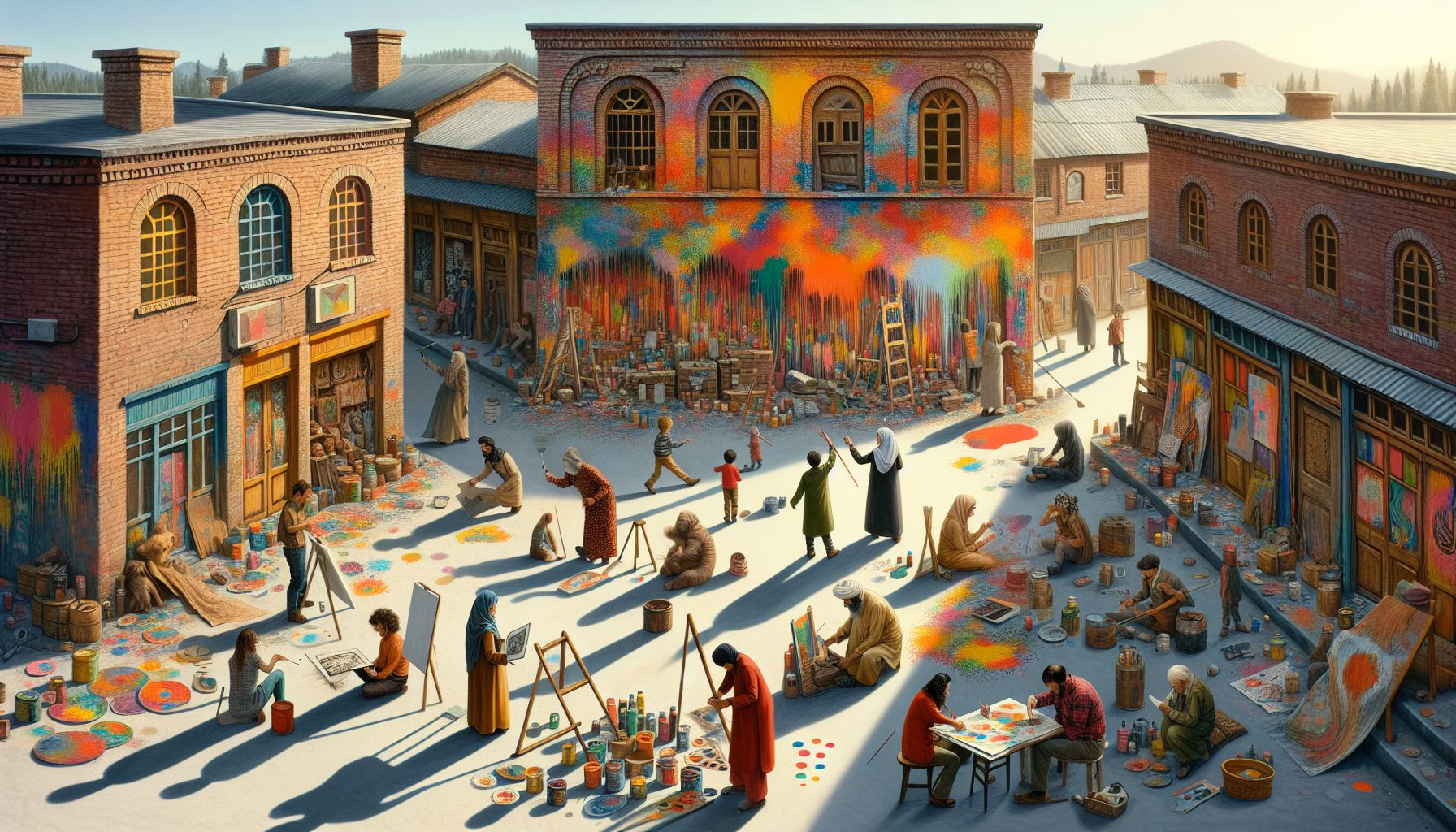
Let AI Paint the Town: A Creative Explosion
You guys, isn’t it wild to see just how far Artificial Intelligence has muscled its way into the creative arts scene? I mean, we went from having AIs depressing our cats by beating them at chess to witnessing literal robot poets in action. This might sound straight out of a sci-fi novel, but it feels like we’re officially living in the techno-utopia those movies promised us. Let’s dive into this creative AI rabbit hole and see why this is secretly the coolest thing ever.
AI: The Art School Rebel
So, first off, what on earth can AI create? That used to be an oxymoronic question, like asking if robots can take salsa lessons. But the times, they are a-changin’. AIs like DALL-E and MidJourney are now pretty much art school drop-ins that can hand you a masterpiece as they casually compute complex algorithmic equations in the background. Talk about multitasking.
I’ve seen AI-generated artwork that’s genuinely gorgeous, but even more exciting is when they move beyond static images. Some AI programs out there, like OpenAI’s MuseNet, are creating symphonies with the passion of Beethoven himself, but with less powdered wigs. To top it all off, AI’s dabbling in storytelling, teaming up with all sorts of humans to spit out tales that range from the whimsically imaginative to surprisingly insightful.
The Tech Behind the Magic
Alright, let’s shift gears to what’s driving this leap in creativity. It’s not the tooth fairy sprinkling processors with magic. It’s basically an intersection of booming computational power, mind-boggling amounts of data, and some really sharp minds. Imagine being able to view and understand motifs from a stack of a million images, or simply coming up with a jazz chorus inspired by every tune that ever hit a high note.
Here’s the kicker: This ability to understand context just resonates creativity. Machine learning models are now exploring “latent space” (consider this your sci-fi buzzword bingo card), connecting dots we hadn’t considered, and coming up with inspiring solutions. They’re not solving mathematical problems yet. They’re being closer to digital Jackson Pollocks, splattering creative genius unexpectedly and gorgeously.
The Ownership Puzzle
Say you’re scribbling poems, and AI decides to chime in with profound thoughts about existence. Cool, right? But it gets complicated fast. AIs are so good now at processing information that they’re generating ideas that feel genuinely original.
Legal frameworks in creative fields are slowly catching up to the blurred ownership between humans and machines. It’s a complex dance of giving proper credit without having every artist and musician throwing a fit over songwriter credits (and reasonably so, honestly).
Creative Collaboration, Not Competition
Here’s where things get really interesting. AI isn’t replacing human creativity, it’s amplifying it. Musicians who started as garage bands are now working with AI co-producers to find sounds they never would have discovered on their own. These AI tools are like having an incredibly well-trained collaborator who never gets tired and has listened to every song ever recorded.
I’ve watched teams blend wildly different creative elements using AI as a bridge. Visual artists sync their work with AI-generated music, or writers use AI to brainstorm plot twists they’d never considered. It’s like having a creative partner who thinks in completely different patterns but somehow gets exactly what you’re going for.
What’s Next? Nobody Knows, But It’s Fascinating
Honestly? I think we’re still in the early days of figuring out what AI creativity even means. Every few months, someone releases a new tool that makes me rethink what’s possible. We’re probably going to see AI that can collaborate in real-time, maybe even AI that develops its own artistic preferences and styles.
The question isn’t whether AI will change creative work anymore. It already has. The question is how we adapt, how we maintain our human voice while leveraging these incredible new capabilities. And frankly, I’m excited to find out.