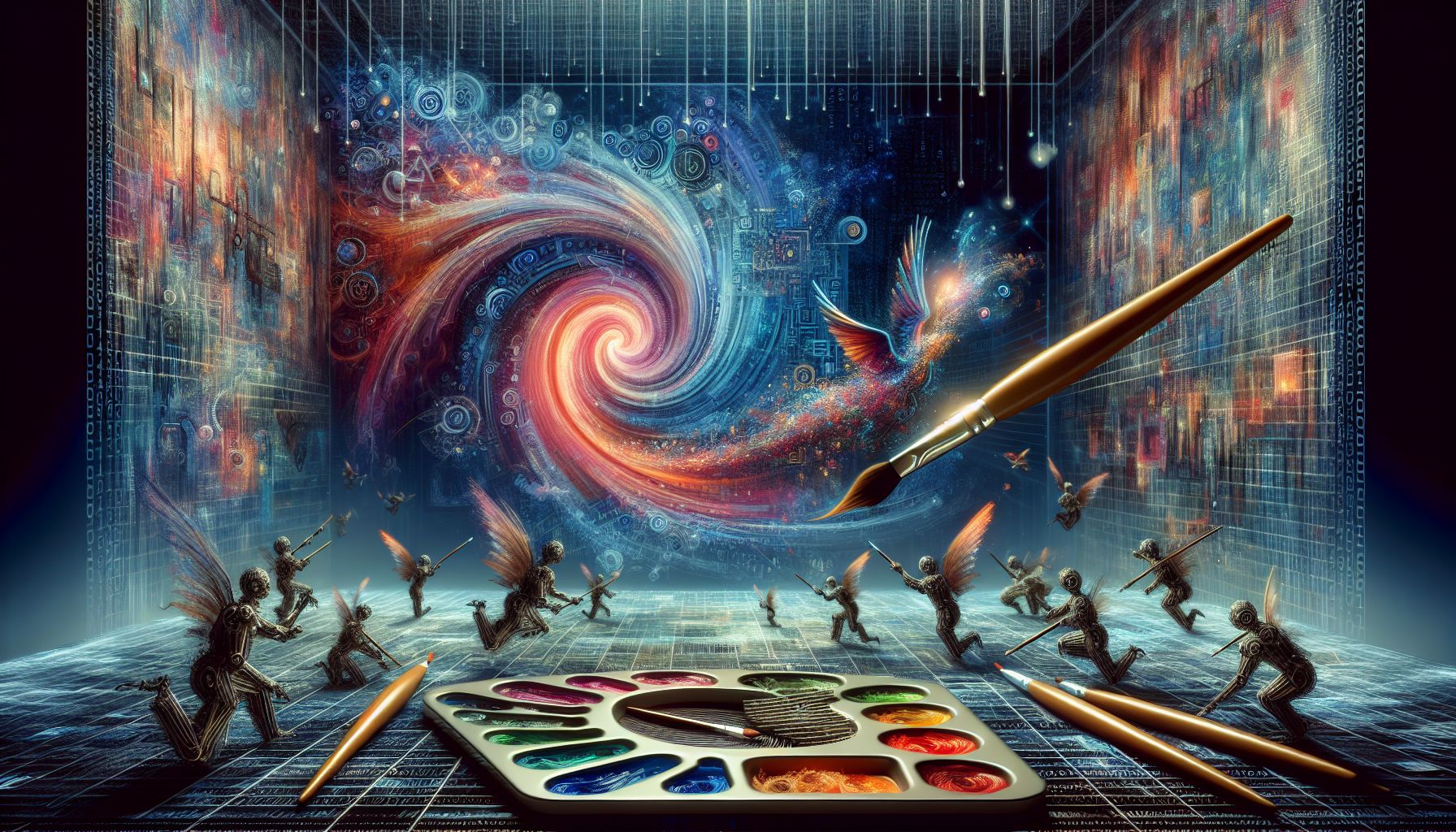
AI Quills and Cyber Canvases: The Renaissance of Creativity
Hey tech aficionados! It’s another beautiful day in the matrix, and if you’re anything like me, coffee isn’t your sole morning ritual. You’re just as eagerly tuning into the latest waves of tech buzz. Speaking of which, ever looked at sunrises from a Parisian bridge, listened to a Beethoven sonata, or swooned over a Matisse painting and wondered—how could machines ever grasp this dance of light and shadow, rhythm and color? Well, my fellow ones and zeros, here we are in a world where AI doesn’t just handle logic or manage your fantasy football stats. It creates. Welcome to the collision of Artificial Intelligence and the Creative Arts.
The Digital Brushstroke Revolution
You might’ve heard this one buzzing through the grapevine: AI has gotten to the point where it isn’t just copying the styles of famous painters or composers. No, it’s creating entirely new genres. This isn’t sci-fi anymore! Picture algorithms that can write symphonies like digital Beethoven babies, sketch something in Picasso’s style using photos of your lazy Sunday, or even design an immersive experience where traditional Japanese art meets VR. If art is language, these AIs are getting pretty fluent in speaking Caravaggio.
Flashback Arrow: The New AI Creators
In the past few years, companies like OpenAI and DeepMind have released their caffeinated creations through tools like GPT-4 and DALL-E. Add in other players, and you’ve got a real Avengers assemble situation targeting your canvases. The creations are both unique and strangely connected by our shared cultural heritage. Think digital collaborations where forgotten silent film culture meets next-gen animation powered by AI. Abstract cinematography isn’t just about cutting room floors anymore.
Artistry with a Brainy Twist
Now, let’s talk content generators. Ever sit at your keyboard, staring at a screen full of unwritten brilliance, classic writer’s block rearing its stubborn head? Here comes the cavalry. AI content generators can launch writers into what some people jokingly call infinite monkey syndrome: endless experimentation without the crushing weight of deadlines. What these systems create can echo Shakespeare while feeling natural enough for modern readers.
That magic doesn’t stop with literature. Take cinematic CG graphics or music composition. Chart-topping artists are using AI strategically in songwriting, creating rich, layered compositions that hit just right for our ears.
The Human-AI Creative Partnership
But here’s the thing: AI might be breaking new ground, but it works best when paired with human creativity. The most interesting projects I’ve seen combine AI’s processing power with human intuition and emotional intelligence. Artists use AI as a collaborator, not a replacement. They feed it ideas, let it generate variations, then shape those outputs into something genuinely moving.
Some artists love this partnership. Others worry about authenticity. Both reactions make sense. We’re in uncharted territory here, figuring out what creativity even means when machines can generate compelling art.
Getting Practical About It
So beyond the hype, what does this actually mean for creators? AI tools are becoming more accessible and powerful. A novelist can use AI to brainstorm plot twists. A musician can generate backing tracks. A visual artist can create hundreds of concept variations in minutes instead of weeks.
The learning curve varies. Some tools feel intuitive right away. Others require patience and experimentation. But once you figure them out, they can seriously speed up the creative process.
Where We’re Heading
I think we’re moving toward a creative landscape where AI becomes as common as Photoshop or Pro Tools. It won’t replace human artists, but it’ll change how they work. The artists who thrive will be those who learn to use these tools effectively while maintaining their unique voice and perspective.
We’ll probably see new art forms emerge that couldn’t exist without AI. Interactive narratives that adapt in real-time. Music that responds to your mood. Visual art that evolves based on viewer engagement. The possibilities are pretty wild when you think about it.
Here’s My Take
Look, I’m excited about AI’s creative potential, but I’m not naive about the challenges. Questions about copyright, authenticity, and economic impact for human creators are real and need addressing. The technology is advancing faster than our ability to understand its implications.
But that’s how it goes with any significant technological shift. We adapt, we figure out new rules, we find ways to use these tools that enhance rather than diminish human creativity. The artists who embrace this change while staying true to their vision will probably come out ahead.
Related: Mobile gaming revolution: Past, Present, and Future