The AI Art Clause War: Why 2025’s Illustrator Agreements Matter More Than You Think
When the Fine Print Became a Battlefield
Something shifted in the art world last year. Not in galleries or auction houses, but in the unglamorous terrain of contract language, disclosure requirements, and copyright precedent. The Graphic Artists Guild and major publishing houses signed landmark agreements requiring explicit labeling of AI-assisted cover art. At the same time, the U.S. Copyright Office released formal guidance clarifying that AI-generated images without sufficient human authorship cannot receive copyright protection. These weren’t flashy announcements. They didn’t trend on art Twitter. But they changed everything about how illustration as a craft gets valued, protected, and compensated.
This is the moment we’ll point back to. The 2025 SAG-AFTRA agreements and the illustrators’ partnership deals represent the first real institutional pushback against the assumption that AI tools would simply replace human makers. They’re also forcing a reckoning with what we actually mean when we talk about authorship, craft, and artistic labor. These contracts are the skeleton key to understanding what comes next for any creative practitioner.
The Numbers Tell a Story About Displacement and Loss
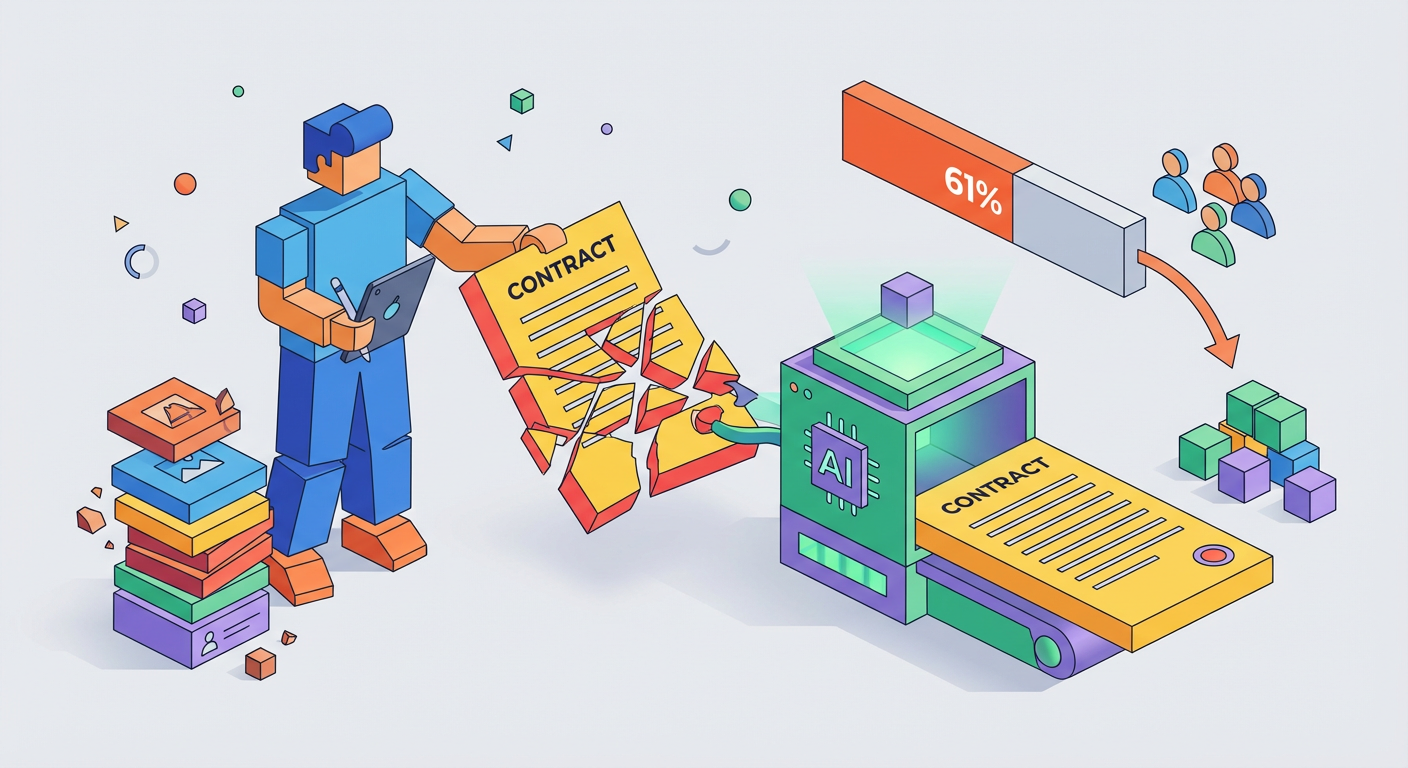
Let’s talk about what happened in the year before these agreements took shape. According to Adobe’s 2025 Creative Economy report, 61 percent of freelance illustrators reported losing at least one client contract directly to AI-generated alternatives in the previous twelve months. That’s not speculation or anxiety. That’s displacement. That’s illustrators with established client relationships watching those relationships evaporate because a design director can generate seventeen variations of a concept in five minutes instead of waiting two weeks for sketches.
The ripple effects moved upstream too. The Authors Guild documented something quieter but equally devastating: advances for illustrated book projects fell an average of 23 percent between 2023 and 2025, with publishers explicitly citing AI cost-reduction strategies in their justifications. Picture books aren’t just commercial products. They’re the entry point for illustrators building careers, the place where craft gets developed through iteration and feedback. When those contracts shrink, the infrastructure of artistic development shrinks with them.
The estimated 12,000 working illustrators affected by the new disclosure agreements understand this intimately. They’ve watched the tooling change. They’ve felt the market shift. What the 2025 partnership agreements did was force transparency into that system. If a cover is AI-assisted, it now gets labeled. That seems straightforward until you realize publishers have every incentive to avoid that label, which means they have incentive to hire illustrators instead.
Copyright Law Finally Caught Up to the Question We’ve Been Asking
Here’s where the legal architecture matters. The U.S. Copyright Office’s 2025 clarification on AI authorship wasn’t abstract policymaking. It was a response to over 40 disputed registration cases where the Copyright Office had to actually decide: does this count as human work? The answer was no. Not unless sufficient human authorship is demonstrable.
This matters because copyright protection is how illustrators actually make money over time. Licensing, reuse rights, derivative work negotiation — these all depend on owning your work legally. When the Copyright Office formally states that an image created entirely through prompting an AI system cannot receive protection, that image loses enormous value as an asset. It’s not just an aesthetic distinction. It’s economic architecture. You can read the U.S. Copyright Office AI authorship guidance yourself if you want to see how carefully they worked through the layers.
The Graphic Artists Guild recognized this immediately. They understood that the vulnerability wasn’t just economic but legal. Without clear guidance about what qualified as human work and what didn’t, there was no foundation for the protection illustrators needed. So they built it into the partnership agreements. Publishers using AI-assisted cover art now have to disclose it. That disclosure creates documentation. That documentation creates accountability.
Karla Ortiz’s Testimony Changed the Conversation Entirely
In October 2025, illustrator Karla Ortiz testified before the Senate Judiciary Committee. Over 2 million people watched the livestream. That number matters because it means the conversation stopped being internal to the art world. Ortiz, a lead plaintiff in the ongoing Stability AI lawsuit, didn’t use abstract language about creative rights. She talked about specific works. She talked about her process. She talked about the precise moment she discovered her paintings had been used to train an image generation model without permission or compensation.
That testimony crystallized something the contracts had been circling around: this isn’t about whether AI tools should exist. It’s about whether the people whose work trained those tools get a say in how their labor is used. The Senate hearing legitimized that question at the policy level. It made clear that illustrators aren’t being precious or technophobic. They’re asking for the same fundamental rights that have protected creative workers for a century.
The 2025 SAG-AFTRA agreements incorporated similar protections for actors. The parallel isn’t coincidental. Both professions recognized that the threat was immediate and structural. Both needed contractual language that treated AI as a tool requiring negotiation and consent, not an inevitability requiring surrender.
What These Contracts Actually Protected
The disclosure requirements in the Graphic Artists Guild agreements do something surprisingly powerful: they make the craft visible. When a cover is labeled AI-assisted, it tells readers something true about how that image was made. That transparency has cascading effects. It affects purchasing decisions. It affects the cultural value assigned to different kinds of making. It forces publishers to make a choice: do you want the marker of human artisanship, or do you want the cost savings?
The Copyright Office guidance protected something equally crucial: it established that human authorship matters legally. You can’t just feed art into a machine, tweak the output, and claim copyright protection. The threshold for authorship is genuinely high. That means illustrators whose work gets used in AI training have a legal argument that shouldn’t have needed making in the first place. The Graphic Artists Guild AI policy resources spell out exactly how illustrators can document their concerns and participate in collective protection.
What these agreements protected, at bottom, is the premise that making things by hand, through research and sketching and iteration and sitting with a problem until it transforms into something specific and alive, remains valuable. Remains protectable. Remains worth paying for.
This Is About the Future of Craft Itself
The reason these contracts matter more than similar agreements in other fields is because illustration is where the craft of making meets the question of value most directly. An illustrator can’t hide behind algorithms or automation the way some professions can. The work is visibly human or it isn’t. That line, between AI generation and human artistry, is becoming the central line in how we think about creative labor.
These 2025 agreements don’t solve the problem. They establish that there is a problem worth solving. They create the legal and contractual space where illustrators can continue making work with the knowledge that their labor will be credited, their process valued, and their right to control their own output enforceable. Given where things were heading, that’s not nothing.
The contracts won’t be the final word. There will be more lawsuits, more policy clarifications, more negotiations between what machines can do and what we decide machines should do. But we’re having that conversation now because illustrators, actors, and writers forced it. They insisted that craft still matters. That’s worth watching closely.