When Sound Meets Canvas: The Hidden Conversations Between Music and Visual Art
The Rhythm in the Frame
Look at Mondrian’s “Broadway Boogie Woogie” and you’re not just seeing red, yellow, and blue squares. You’re witnessing jazz translated into visual language. Those staccato bursts of color pulse with the same syncopated energy that made 1940s New York swing. Mondrian wasn’t just painting geometric abstractions. He was capturing the improvisation, the call-and-response, the very heartbeat of bebop on canvas.
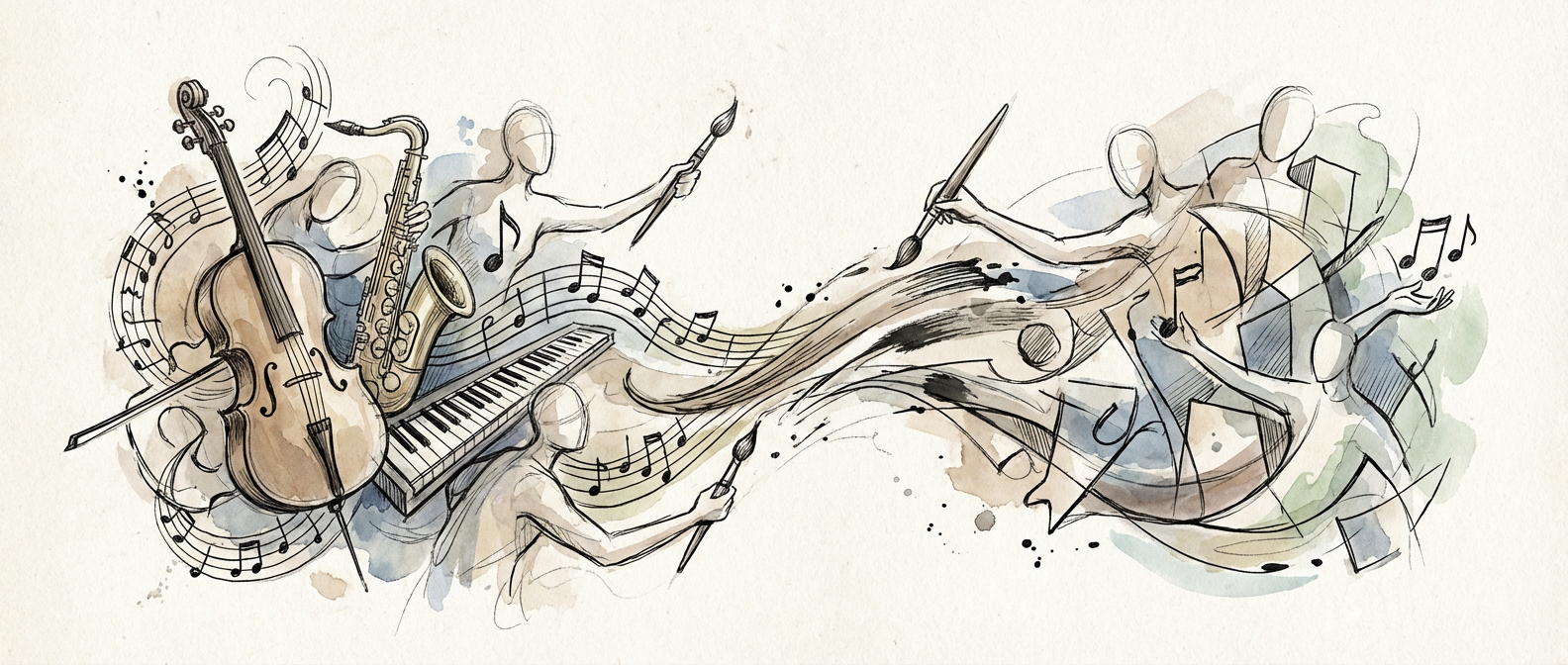
This connection isn’t coincidental. Both jazz and abstract art emerged from similar cultural upheavals, breaking free from traditional structures to create something entirely new. Where bebop musicians fragmented melody into complex rhythmic patterns, abstract painters shattered realistic representation into pure form and color. The tension between order and chaos that defines Charlie Parker’s solos finds its visual echo in Mondrian’s carefully calculated spontaneity.
But here’s where it gets really interesting: both art forms rely on negative space as much as positive elements. A jazz musician knows that silence between notes creates rhythm. Similarly, Mondrian understood that white space between colored blocks generates visual tension. The pause becomes as important as the note. The empty canvas as crucial as the painted square.
Color as Harmony, Texture as Timbre
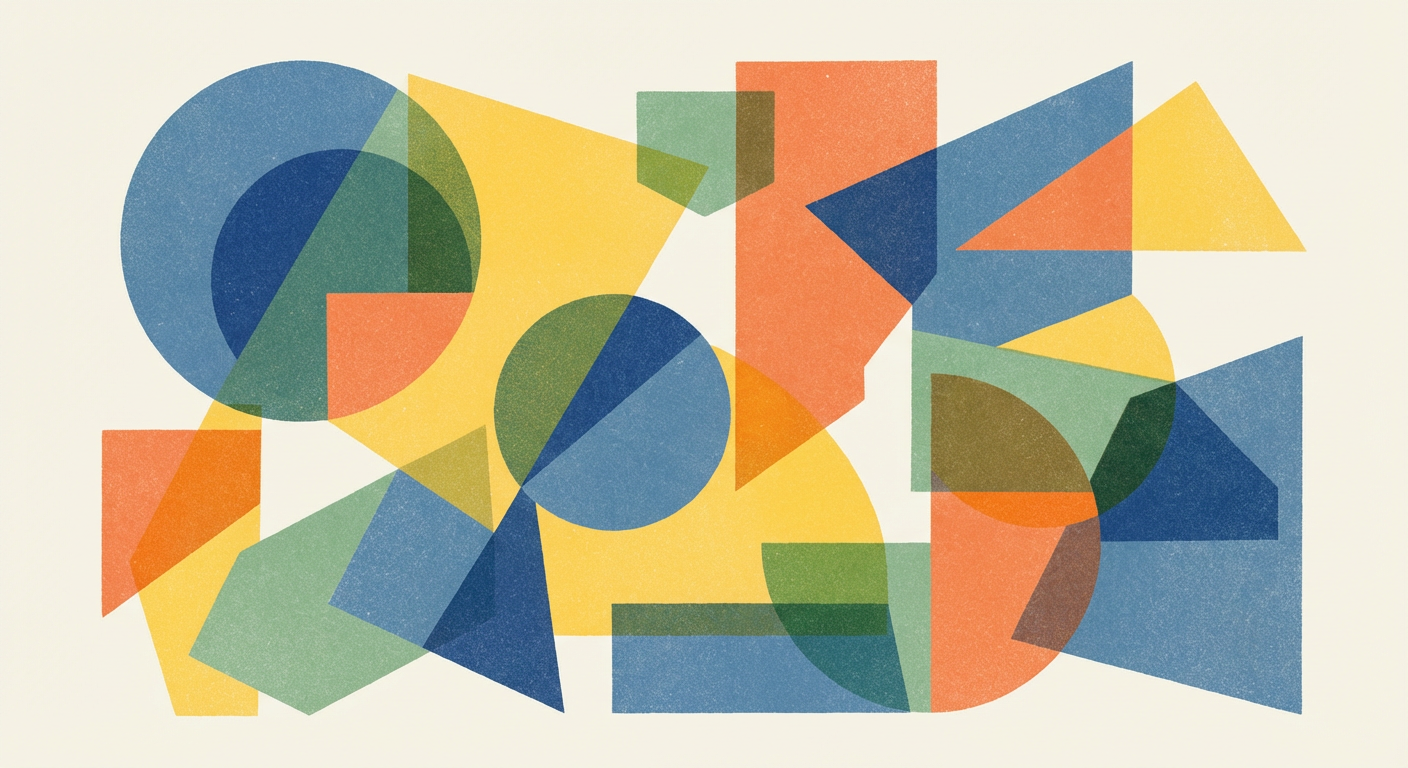
When Wassily Kandinsky wrote “Concerning the Spiritual in Art,” he wasn’t just theorizing about painting. He was describing synesthesia in action. Kandinsky literally heard colors and saw sounds, experiencing yellow as a trumpet’s brash call and blue as a cello’s deep resonance. His paintings operate like musical compositions, with warm colors advancing like brass instruments while cool blues recede into the background like distant strings.
Consider how a painter builds color relationships the same way a composer constructs harmonies. Complementary colors create visual dissonance that resolves when balanced, just as musical tension seeks resolution. Van Gogh’s swirling yellows and purples in “Starry Night” generate the same kind of emotional urgency as a Wagner crescendo. The brushstrokes themselves become rhythm. Short, staccato dabs versus long, flowing sweeps.
Texture in painting functions exactly like timbre in music. A rough, impasto surface catches light differently than smooth glazes, just as a saxophone’s raspy tone differs from a flute’s pure whistle. Jackson Pollock understood this instinctively. His drip paintings weren’t just about color and form. They were about creating visual textures that suggested sound itself, the splatter and flow of paint mimicking the unpredictable beauty of free-form jazz.
Movement and Time in Static Art
Here’s the fascinating paradox: painting is supposedly a static medium, yet the greatest works pulse with energy that unfolds over time. Futurist painters like Giacomo Balla didn’t just want to show movement. They wanted to capture its rhythm. “Dynamism of a Dog on a Leash” freezes multiple moments into a single frame, creating visual polyrhythm that mirrors the complex layering in contemporary musical compositions.
Think about how your eye moves across a canvas. Composition creates visual tempo just as surely as a metronome creates musical time. The sweeping diagonals in Baroque paintings guide your gaze in measured beats, while Impressionist dabs create a shimmering effect that feels like musical tremolo. Rothko’s color field paintings work like ambient music. They exist in extended time, requiring patience to reveal their subtle variations and emotional depths.
Even more fascinating, many artists have directly translated musical structures into visual form. Paul Klee, himself a trained violinist, created paintings that follow fugue patterns, with visual themes appearing, developing, and interweaving just like Bach’s complex polyphonic compositions. His work proves that the mathematical relationships governing musical harmony can generate equally compelling visual arrangements.
The Electronic Age and New Syntheses
Contemporary digital art has exploded the boundaries between audio and visual completely. Artists like Ryoji Ikeda create installations where sound waves become visible architecture, where mathematical frequencies generate both tone and image at once. But this technological fusion actually returns us to something ancient: the understanding that all art forms spring from the same wellspring of human rhythm and pattern-making.
Street art demonstrates this synthesis perfectly. Hip-hop culture emerged from the same urban energy that produced graffiti murals. Both art forms share that element of improvisation within structure. A tagged wall and a freestyle rap both require split-second decision-making within established rules. The bold, graphic styles of murals echo the punchy, rhythmic delivery of rap lyrics. Even the spray paint technique itself creates texture that suggests the hiss and pop of vinyl records.
Video art takes this convergence even further. Bill Viola’s slow-motion installations feel like visual adagios, stretching time until every gesture becomes monumental. Meanwhile, rapid-cut experimental films create stroboscopic effects that function like visual percussion, overwhelming the viewer with information at the same frenetic pace as electronic dance music.
Finding Your Own Connections
The next time you’re in a gallery, try this experiment: close your eyes while standing in front of a painting, then open them and notice what sounds come to mind. Does the work suggest major or minor keys? Fast or slow tempos? Can you hear the artist’s rhythm in their brushstrokes? These aren’t fanciful connections. They’re recognition of the deep structural relationships that link all art forms.
Similarly, when listening to music, let yourself see colors and shapes. Notice how different instruments occupy different visual spaces in your imagination. Pay attention to how musical phrases create the same kinds of tension and release that you experience when viewing powerful paintings. These cross-sensory experiences aren’t accidents. They’re glimpses into the fundamental unity underlying human creative expression.
What musical pieces remind you of specific paintings, or vice versa? I’d love to hear about the unexpected connections you discover when you start paying attention to the conversations happening between your ears and your eyes.