Starting Your Art Collection: Museum Walls vs. Your Walls (And Why Both Matter)
The Gallery Paradox: Why Collecting Isn’t Just About Owning
Here’s the thing about art collecting that nobody tells you: it’s not really about possession. It’s about relationship. Think about how you feel standing in front of Monet’s water lilies at MoMA versus discovering a small gouache painting at a local artist’s studio sale. Both experiences create connection, but the intimacy feels completely different.
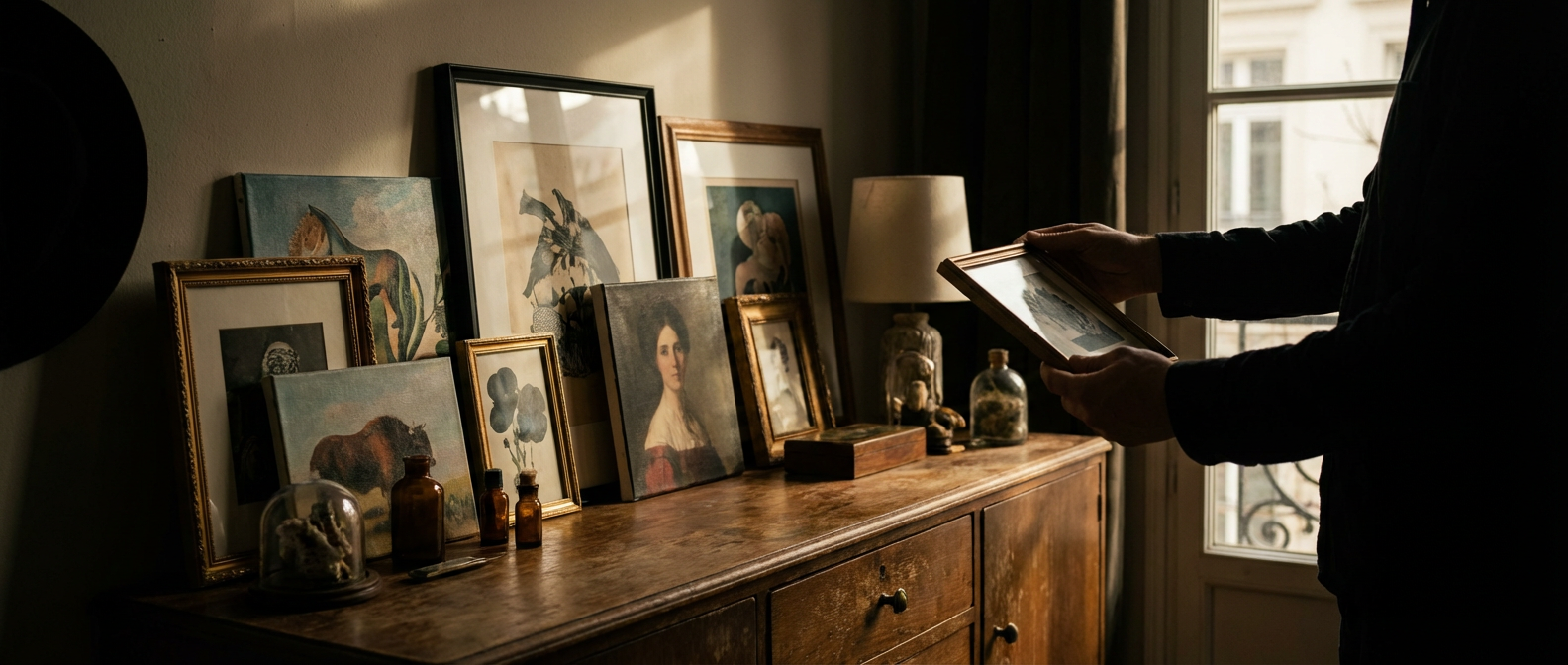
Museums preserve art for posterity, creating those hushed spaces where we study artistic genius. Your home collection does something else entirely. It creates daily dialogue. That small print above your coffee maker becomes part of your morning ritual, shifting meaning with your moods and the changing light. I’ve watched this happen with a small etching in my kitchen, how it looks melancholy on gray mornings and almost cheerful when afternoon sun hits it.
The comparison reveals something important: great collections aren’t about scale or prestige. They’re about curation and intention. The Met’s Egyptian wing didn’t happen overnight, and neither should your living room gallery wall.

Print Culture vs. Original Fever: Finding Your Sweet Spot
Let’s address the elephant in the room: original versus reproduction. Art snobs will tell you prints don’t count, but they’re missing the point entirely. A well-made print of Van Gogh’s “Starry Night” carries the same visual DNA as the original. You’re still experiencing those swirling brushstrokes, that electric blue palette, the way his hand moved across the canvas in 1889.
The difference is in aura and market value, not aesthetic impact. High-quality prints from museum shops often blow away what you’ll find in big-box stores. Look for archival papers, proper color matching, and reasonable sizes. A small, well-printed Egon Schiele drawing beats a poster-sized Monet any day.
Here’s where it gets interesting: you can mix both approaches. Start with prints of masters you love, then gradually add affordable originals from emerging artists. This creates layers in your collection, like building a playlist that includes both Mozart and that indie band you discovered last month.
Local art schools are goldmines for original work. Senior thesis exhibitions, faculty shows, and student sales offer pieces for under $200. You’re not just buying art, you’re investing in someone’s future career. Some of today’s gallery darlings started exactly here. Plus, there’s something special about saying “I bought this before anyone knew her name.”
Frame of Reference: How Context Changes Everything
Ever notice how a painting looks completely different in natural light versus gallery spotlights? This isn’t just about aesthetics, it’s about understanding how art functions in space. Museums control every variable: lighting, wall color, spacing, even the height at which pieces hang. Your home offers different opportunities.
That watercolor sketch that might get lost in a white-cube gallery could sing against your deep green bedroom wall. Small works that would disappear in museum halls become intimate treasures in narrow hallways or above side tables. Scale relationships shift dramatically between institutional and domestic spaces.
Think about how Renaissance painters designed altar pieces for specific architectural settings, or how Rothko planned his Houston chapel paintings for meditative contemplation. Your collection works the same way. That abstract piece behind your dining table creates a different viewing experience than it would in a sterile gallery context. You get to eat dinner with it, argue with your partner in front of it, watch how candlelight changes its mood.
Thrift stores and estate sales often yield incredible vintage frames that cost more than the art you’ll put in them. A $15 print in a $40 vintage frame creates presence that rivals much more expensive pieces. The frame becomes part of the artistic statement, adding historical layers to contemporary choices.
The Long Game: Building Relationships Over Accumulating Objects
Here’s what separates real collectors from people who just hang things on walls: they understand that art collecting is fundamentally social. Follow local artists on Instagram. Attend gallery openings not to buy, but to learn. Ask questions. Most artists love talking about their process, their influences, their next projects. Some of my best collecting discoveries came from casual conversations at wine-and-cheese openings.
These relationships often lead to opportunities that money can’t buy. Studio visits. First dibs on new work. Payment plans that make larger pieces accessible. Some artists offer work trades. Maybe you’re a graphic designer who could create their exhibition catalog in exchange for a small painting.
Art fairs aren’t just for wealthy collectors. Many have emerging artist sections with pieces under $500. The Affordable Art Fair specifically targets new collectors. Regional shows often showcase local talent at accessible prices. You’re not competing with hedge fund managers here, you’re discovering artists before they hit the big galleries.
Consider forming a buying group with friends. Pool resources to purchase larger pieces that you rotate between homes, or collaborate on commissioned work that reflects your shared aesthetics. This approach mimics how Renaissance patrons supported artists while spreading costs among multiple supporters.
Quality Over Quantity: The Slow Burn Approach
The best collections develop organically over time, reflecting the collector’s evolving tastes and deepening understanding. Start with one piece that genuinely moves you, even if you can’t articulate why. Live with it. Let it teach you what you respond to: color, composition, emotional tone, artistic technique. I still remember the first piece that made me stop in my tracks, a small collage that I couldn’t afford but kept thinking about for weeks.
Pay attention to patterns in your preferences. Do you gravitate toward geometric abstractions or organic forms? Muted palettes or bold colors? Understanding your visual vocabulary helps you make more intentional choices as you expand your collection.
Document your collection’s growth. Photograph pieces in different lights and seasons. Notice how your relationship with individual works changes over time. That painting you bought impulsively might reveal layers of meaning months later, while carefully chosen pieces sometimes lose their initial appeal. It’s okay to admit when something stops working for you.
Think about your collection as a form of visual autobiography. Each piece marks a moment in your life, a particular enthusiasm, a relationship with a specific artist or movement. Years from now, you’ll remember not just the art itself, but where you discovered it, who you were when it spoke to you, how it helped shape your developing aesthetic sense.
What patterns are you noticing in your own visual preferences? I’d love to hear about the first piece that made you stop and really look, whether it was in a museum, a friend’s apartment, or scrolling through an artist’s feed at 2 AM.