Why We’re Getting Traditional Textile Arts All Wrong (And Why That Matters More Than You Think)
The Museum Problem: When Context Dies Behind Glass
Walk into any major art museum and you’ll find textiles relegated to the basement or tucked away in “decorative arts” wings. A Yoruba adire cloth hangs lifeless under fluorescent lights, stripped of the indigo-stained fingers that created it and the ceremonial weight it once carried. The placard mentions technique and date, but nothing about how that resist-dye process connects to spiritual protection or community identity.
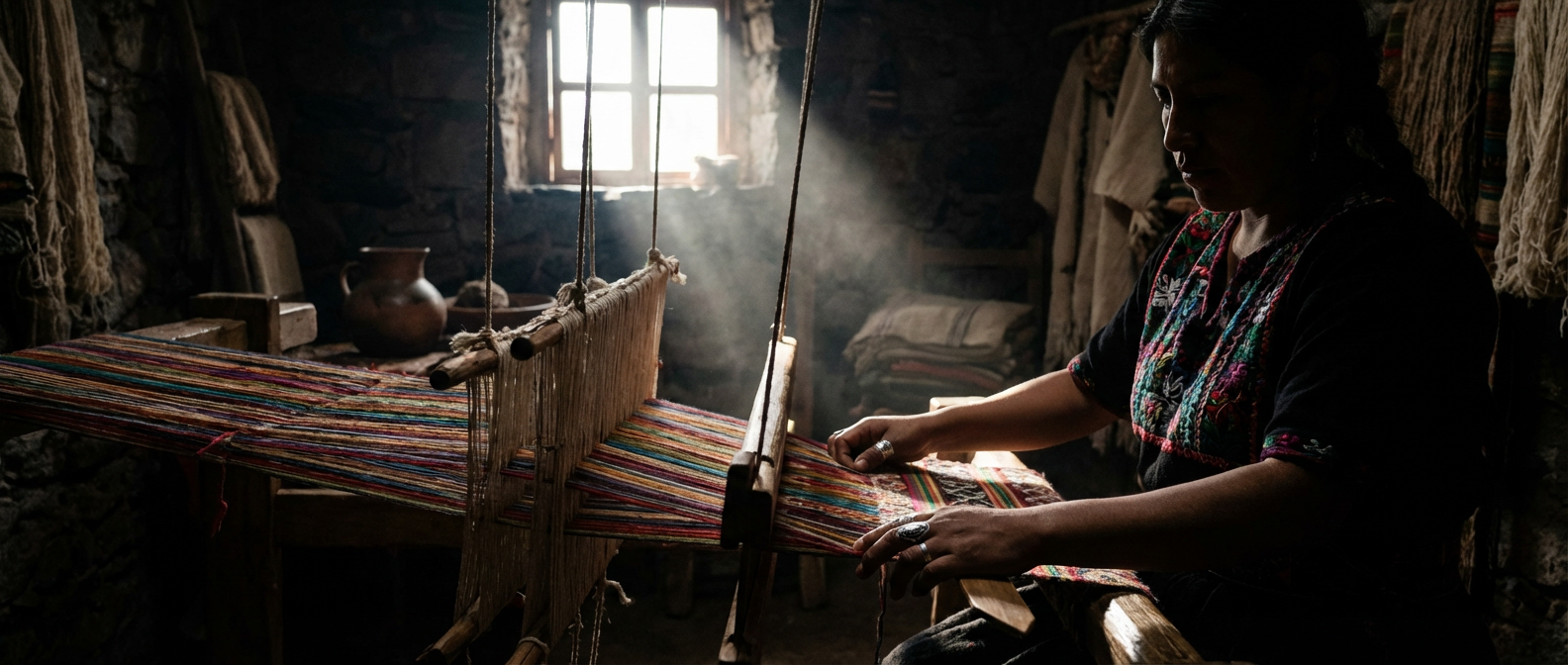
This isn’t just poor curation. It’s cultural flattening on an institutional scale. When we display a Peruvian backstrap loom weaving next to a Japanese sashiko jacket with identical explanatory frameworks, we’re saying technique matters more than meaning. We’re treating thousand-year-old knowledge systems like Pinterest inspiration boards.
The real tragedy? Most visitors leave thinking they’ve learned something about “ethnic textiles” when they’ve actually witnessed the systematic erasure of cultural nuance. That gorgeous geometric pattern isn’t just decorative, it’s a mapping system, a prayer, a form of resistance. But you’d never know it from the wall text.

The Instagram Effect: When Tradition Becomes Trend
Social media has turned traditional textile techniques into lifestyle content. Suddenly everyone’s a “fiber artist” posting macrame wall hangings that bear surface resemblance to Mapuche textiles but carry none of the cultural weight. The algorithm rewards aesthetic appeal over cultural understanding, and centuries of meaning get reduced to boho chic.
Take the current obsession with indigo dyeing. Yes, it’s beautiful. Yes, the process is meditative. But when Western artists appropriate Japanese shibori techniques without acknowledging their connection to Buddhist philosophy and social hierarchy, they’re performing cultural strip-mining. They’re taking the pretty parts and leaving behind everything that gives the practice meaning.
This isn’t about gatekeeping creativity. It’s about recognizing that some knowledge belongs to specific communities and requires deeper engagement than a weekend workshop. When we treat traditional techniques as interchangeable aesthetic choices, we’re continuing colonial patterns of extraction under the guise of artistic exploration.
The Authenticity Trap: Why “Pure” Traditions Are a Myth
Here’s where it gets complicated: the very idea of “authentic” traditional textiles is often as constructed as the museum displays that house them. That “ancient” Guatemalan huipil pattern might incorporate Spanish colonial motifs. Those “timeless” Indian block prints evolved in response to British trade demands. Culture isn’t static, and neither are its textile expressions.
The authenticity obsession creates impossible standards. Contemporary indigenous artists get criticized for using synthetic dyes or modern looms, as if innovation somehow invalidates their cultural authority. Meanwhile, non-indigenous artists get praised for “preserving traditions” by copying historical techniques, even when those techniques have evolved within their originating communities.
This double standard reveals our deep discomfort with cultural change. We want traditional arts to remain frozen in time, serving as antidotes to our modern anxiety rather than as living practices that respond to contemporary realities. But authentic tradition isn’t about purity, it’s about continuity of meaning within evolving forms.
Beyond Appropriation: Toward Genuine Cultural Exchange
The solution isn’t to stop cross-cultural learning. It’s to do it with intention and reciprocity. When Japanese artist Reiko Sudo collaborates with traditional weavers to create contemporary textiles that honor historical techniques while addressing modern environmental concerns, that’s productive exchange. When fashion brands copy sacred patterns for mass production without compensation or credit, that’s extraction.
Real cultural exchange requires relationship-building over time. It means understanding not just the how but the why. It means recognizing that learning someone else’s textile tradition carries responsibility to the technique, to its originators, and to its continued evolution within its cultural context.
Look at how some contemporary artists are getting this right. Wendy Red Star incorporates traditional Crow beadwork into photography that interrogates stereotypes about Native identity. Her work doesn’t just use traditional techniques; it advances traditional purposes of storytelling and cultural preservation through contemporary means.
The Future of Textile Traditions in a Global World
Traditional textile arts aren’t museum pieces. They’re living languages that continue to evolve as their communities engage with global realities. The question isn’t whether traditions should change, but how they can change while maintaining their essential character and community connection.
Technology offers new possibilities for both preservation and innovation. Digital archives can document traditional knowledge in ways that respect cultural protocols about who can access what information. 3D printing allows for new interpretations of traditional structural techniques. But these tools only serve traditional communities when those communities control their use.
The most promising developments happen when traditional knowledge holders lead the conversation. When Maori weavers use contemporary materials to create works that strengthen cultural identity, when Afghan carpet weavers incorporate war imagery into traditional patterns, when Mexican rebozo makers adapt their techniques for modern fashion while maintaining fair trade relationships, these aren’t dilutions of tradition. They’re tradition in action.
What fascinates me most is how studying these textile traditions reveals the inadequacy of our Western art categories. When you understand that a Navajo rug embodies a worldview that doesn’t separate aesthetic beauty from spiritual practice from economic survival, our museum walls and academic departments start to seem pretty arbitrary. Maybe the question isn’t how to better display traditional textiles, but how their integrated approach to making and meaning might transform our understanding of what art can be.