Venice 2026 and the Unfinished Revolution: How Adriano Pedrosa’s ‘Stranieri Ovunque’ Forced the Biennale to Look in the Mirror
The Moment Everything Shifted
When Adriano Pedrosa stepped into the role of Venice Biennale curator in 2024, he didn’t just curate an exhibition. He performed an intervention. The Brazilian art historian became the first Latin American to lead the world’s most prestigious biennial at a moment when the art world was finally, urgently asking questions it should have asked decades ago: Whose voice gets amplified? Whose work gets remembered? Who decides what counts as art worth seeing?
His answer was radical in its simplicity. For the 61st Biennale, opening in April 2026, that foundational shift isn’t disappearing into the archive. It’s reshaping the entire conversation about national representation, curatorial authority, and who gets to claim legitimacy on the global stage. That matters. The Venice Biennale isn’t just another art fair. It’s a platform that determines which artists enter the institutional bloodstream, which nations’ cultural narratives get centered, and ultimately, which stories about contemporary art survive into art history textbooks.
Breaking the 130-Year Pattern
Numbers can feel cold, but these ones carry weight. In 2024, Pedrosa’s curatorial vision brought 331 artists into the Biennale. Of those, 86 percent had never exhibited there before. Let that land for a moment. In an institution 130 years old, at what was arguably its most visible moment in recent memory, the majority of voices were entirely new to the conversation. That’s not incremental change. That’s a structural reset.
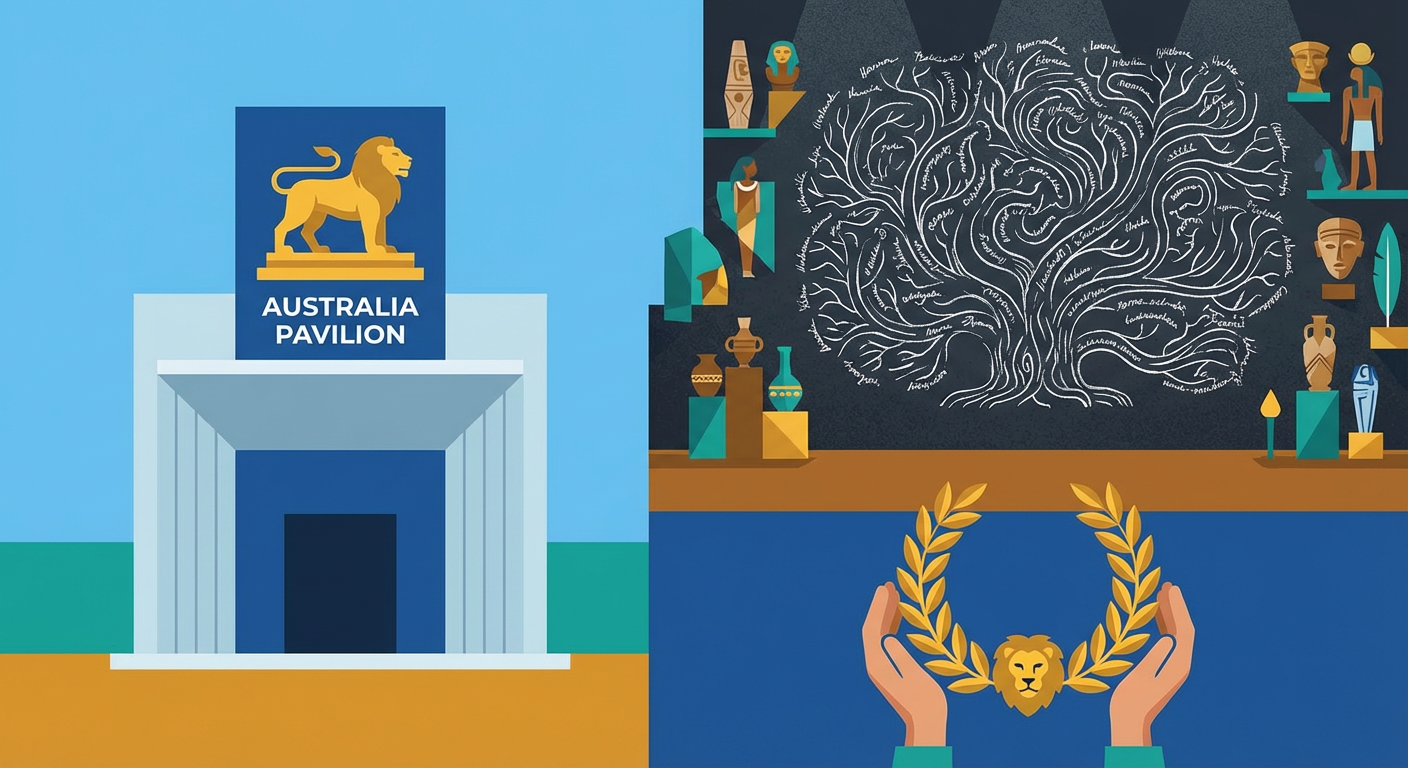
The impact rippled outward in ways that still feel consequential. When Archie Moore’s ‘kith and kin’ won the Golden Lion for Best National Participation, it was recognition that moved beyond aesthetic judgment into something more profound. The work involved 65,000 hand-chalked names, each one a trace of Aboriginal genealogy spanning 10,000 years. The Australian Pavilion’s win wasn’t just celebrating an artist. It was validating a completely different framework for what art could do: how it could function as historical witness, as genealogical map, as intervention into how nations tell stories about themselves. Suddenly, an artist from Australia’s Indigenous communities was being elevated not as an exception or a token, but as a primary voice in a global conversation.
The Money Problem That Nobody Wants to Discuss
Here’s where things get uncomfortable, which is exactly where they should get uncomfortable. The European Cultural Foundation released a report in 2025 that documented what many in the art world already knew but rarely said out loud: the funding architecture supporting Venice’s national pavilions remains deeply, systematically unequal.
G7 nations average 2.1 million euros in pavilion budgets. Sub-Saharan African nations average 180,000 euros. That’s not a gap. That’s a chasm. It means that even after Pedrosa’s curatorial revolution, even after the philosophical reorientation toward inclusivity and global representation, the basic infrastructure supporting artists from different regions remains wildly disparate. An artist from Lagos faces entirely different production constraints than an artist from Paris. That’s not about merit or innovation. That’s about resources, and resources are what actually determine visibility on this scale.
The fact that Pedrosa’s 2024 edition managed to elevate so many debut artists while this structural inequality persists makes the achievement sharper and, somehow, more complicated. The curatorial vision is running up against the economic realities that still govern global art institutions. For 2026, that tension hasn’t resolved itself. It’s only become more visible.
What Happened After the Cameras Left
Museums don’t ignore Venice. They study it. They watch it like it’s a crystal ball showing them which artists matter next. In 2025, both the Guggenheim and Tate Modern released acquisition reports specifically citing the 2024 Biennale as direct influence on 18 new collection purchases of artists from the Global South. That’s not coincidental. That’s institutional validation trickling down from Venice into permanent collections, from temporary spectacle into permanent legacy.
When the Guggenheim acquires a work by an artist who debuted at that Biennale, when Tate Modern enters an artist into its collection based partly on exposure there, something structural has shifted. These artists aren’t visiting Venice and disappearing. They’re entering the institutional ecosystem. They’re being granted the kind of legitimacy that opens doors to future shows, future funding, future opportunities. That’s what it means when a biennial’s curatorial choices reverberate through the entire ecosystem.
But here’s the thing nobody’s saying directly: this happened because one curator made different choices. What happens when the next curator makes different choices? The infrastructure for supporting Global South artists’ pavilion participation hasn’t fundamentally changed. The funding disparities remain stark. The systems that determine which voices get amplified are still largely controlled by the same institutions and funding bodies that controlled them before. The legacy of ‘Stranieri Ovunque’ isn’t secure. It’s fragile. It depends on sustained commitment from curators, institutions, and funders who haven’t necessarily proven they’re committed.
Watching What Comes Next
As April 2026 approaches, there are real questions worth asking about what the next iteration will carry forward and what it might lose. The curatorial announcement for the 61st Biennale will tell us something significant about whether Pedrosa’s intervention was an anomaly or the beginning of a new standard. Has the institution learned? Has it fundamentally reoriented its thinking about representation and access? Or was it a moment, brilliant and important, but ultimately temporary?
The artists debuting in 2024 are watching. The curators making decisions about 2026 are watching. The collectors and institutions deciding where to place their resources are watching. For more details about the upcoming edition and its curatorial direction, La Biennale di Venezia Official Site will release further announcements as we approach spring.
What I find myself thinking about most is this: artistic legitimacy used to feel fixed, like it was determined by centuries of precedent and gatekeeping. Pedrosa proved it’s actually more fragile and more malleable than that. One curator with a different vision can remake the conversation in a single year. That’s hopeful. But it’s also a reminder that progress in these spaces isn’t automatic. It has to be chosen, again and again, by people in positions to make those choices. What are you watching for as 2026 approaches?