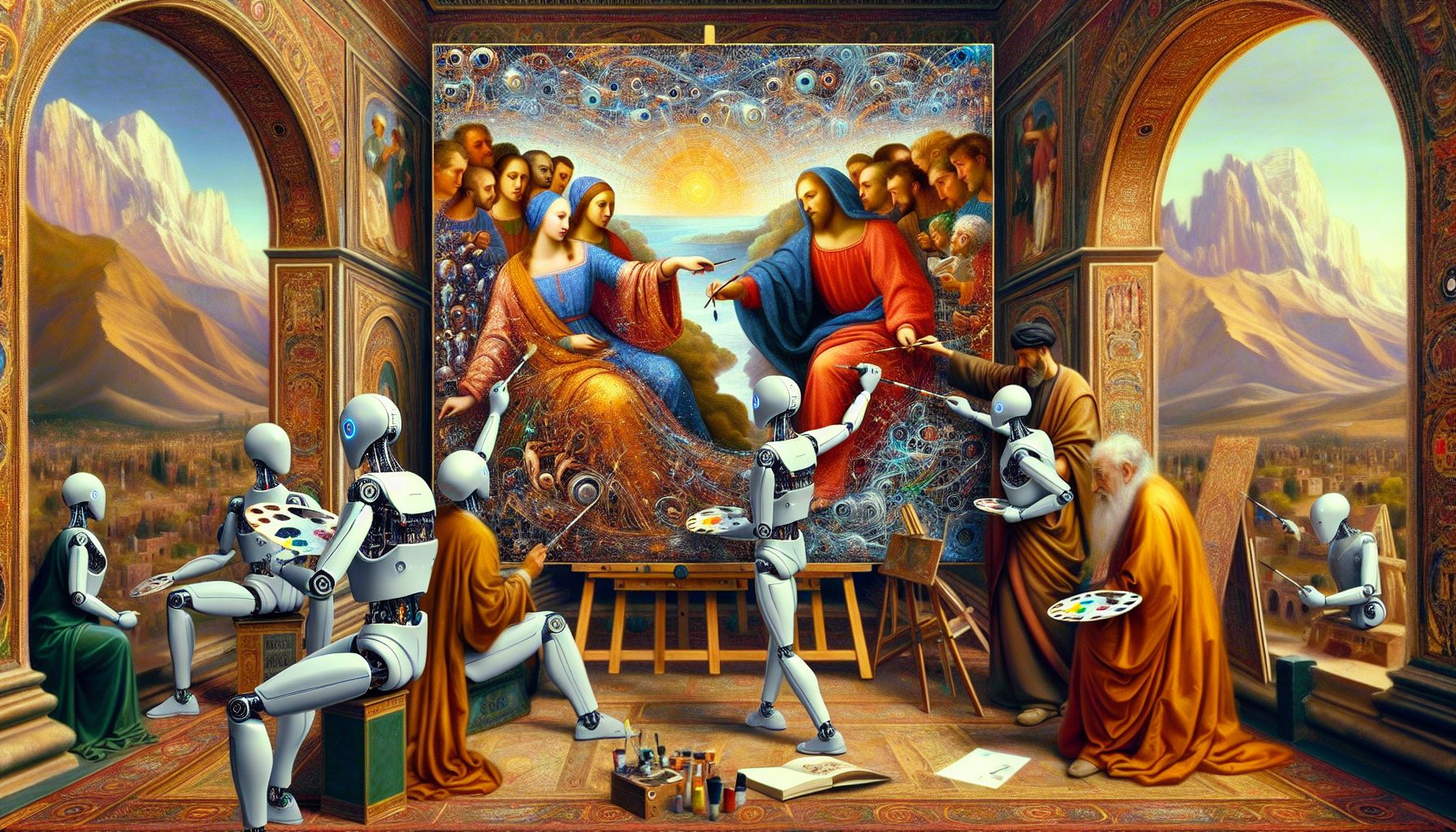
AI in Creative Arts: The New Renaissance
Welcome back, fellow tech enthusiasts! Today we’re diving into something that’s really got me buzzing — the intersection of Artificial Intelligence and the creative arts. Imagine machines not just mimicking creativity, but actually contributing to it! From automated painting to AI-driven music composition, we’re living through what feels like a new Renaissance. And TRUST me, if we play our cards right, AI could become the next Picasso. Or better yet, teach Picasso a thing or two he hadn’t even dreamed!
Machines Get Crafty: The World of AI Art
When we talk about art, the first things that usually come to mind are painters like Van Gogh, musicians like Beethoven, or storytellers like Shakespeare. But what if I told you the names Google DeepDream, OpenAI’s DALL-E, and AIVA might dominate artistic headlines of the future?
Recently, these AI platforms have begun creating art that blurs the lines between human intuition and machine calculation. AI-generated artwork first captured mainstream attention back in 2018 when a piece created by an AI was sold by Christie’s for a whopping $432,500. I predict that we’re just at the foot of what’s to come.
The genius behind AI in visual art lies in neural networks, particularly Generative Adversarial Networks (GANs). In the simplest terms? GANs consist of two neural networks playing a never-ending game of chess against each other. One generates (a brilliant rookie), and the other critiques (the snarky critic). With each game, they get better, pushing AI to produce compositions that are more and more indistinguishable from those of seasoned human creators.
AI’s Rise in the Sonic Universe
Let’s shift gears to the world of sound where AI has shown a symphonic presence. Music and mathematics have been soulmates forever, and AI being this century’s Beethoven doesn’t come as a shocker. Ever heard tunes composed by IBM’s Watson or OpenAI’s MuseNet? Though perhaps not chart-toppers just yet, these AI-generated beats do pulse with real promise!
Remember when AI started creating chorales and sonatas, following in the footsteps of legends like Mozart and Stravinsky? Well, artists like Taryn Southern dropping albums under the co-production of AI signal a type of collaboration no wise studio should ignore! Imagine Britney’s bubblegum pop powered by algorithms or Radiohead’s experimental sounds guided by MIDI tweaks. These are worlds where genres blend in ways we never expected!
AI stepping into classical structures and creating unusual musical combinations brings fresh sounds to our playlists. I think the future will see AI jamming alongside artists on big arena stages.
Storytelling Machines: When Algorithms Write
The writing world is getting shaken up too. AI is churning out everything from blog posts to poetry, and some of it is surprisingly good. We’ve got algorithms winning writing contests and programs that can mimic famous authors’ styles. It’s both fascinating and a little unsettling.
Take GPT-based models, for instance. They can write coherent stories, craft marketing copy, and even attempt poetry. Sure, the results can be hit or miss. Sometimes you get something brilliant, other times it reads like a fever dream. But the technology is improving fast, and writers are starting to use these tools as creative partners rather than replacements.
The Challenges We Can’t Ignore
With AI pushing into creative fields, plenty of artists and writers are feeling uneasy. The big question looms: can a machine’s output ever match the raw emotional depth of human expression? I mean, there’s something fundamentally different about art that comes from lived experience versus art generated by pattern recognition.
Then there’s the whole issue of originality. If an AI trains on thousands of existing artworks or songs, is what it creates truly original? Or is it just a very sophisticated remix? These aren’t just philosophical questions anymore. They’re affecting real artists’ livelihoods and forcing us to rethink what we value in creative work.
What’s Next for Creative AI?
Looking ahead, I think we’re heading toward a world where AI becomes a creative collaborator rather than a replacement. Artists might use AI to brainstorm ideas, experiment with new styles, or handle the more tedious parts of creation. Musicians could jam with AI to discover unexpected chord progressions. Writers might use it to break through creative blocks.
But here’s the thing: the most compelling art will probably still come from the human touch. AI can analyze patterns and generate variations, but it can’t feel heartbreak or experience wonder. Those uniquely human experiences will always be the source of the most moving creative work. The trick is figuring out how to blend the best of both worlds without losing what makes art fundamentally human.