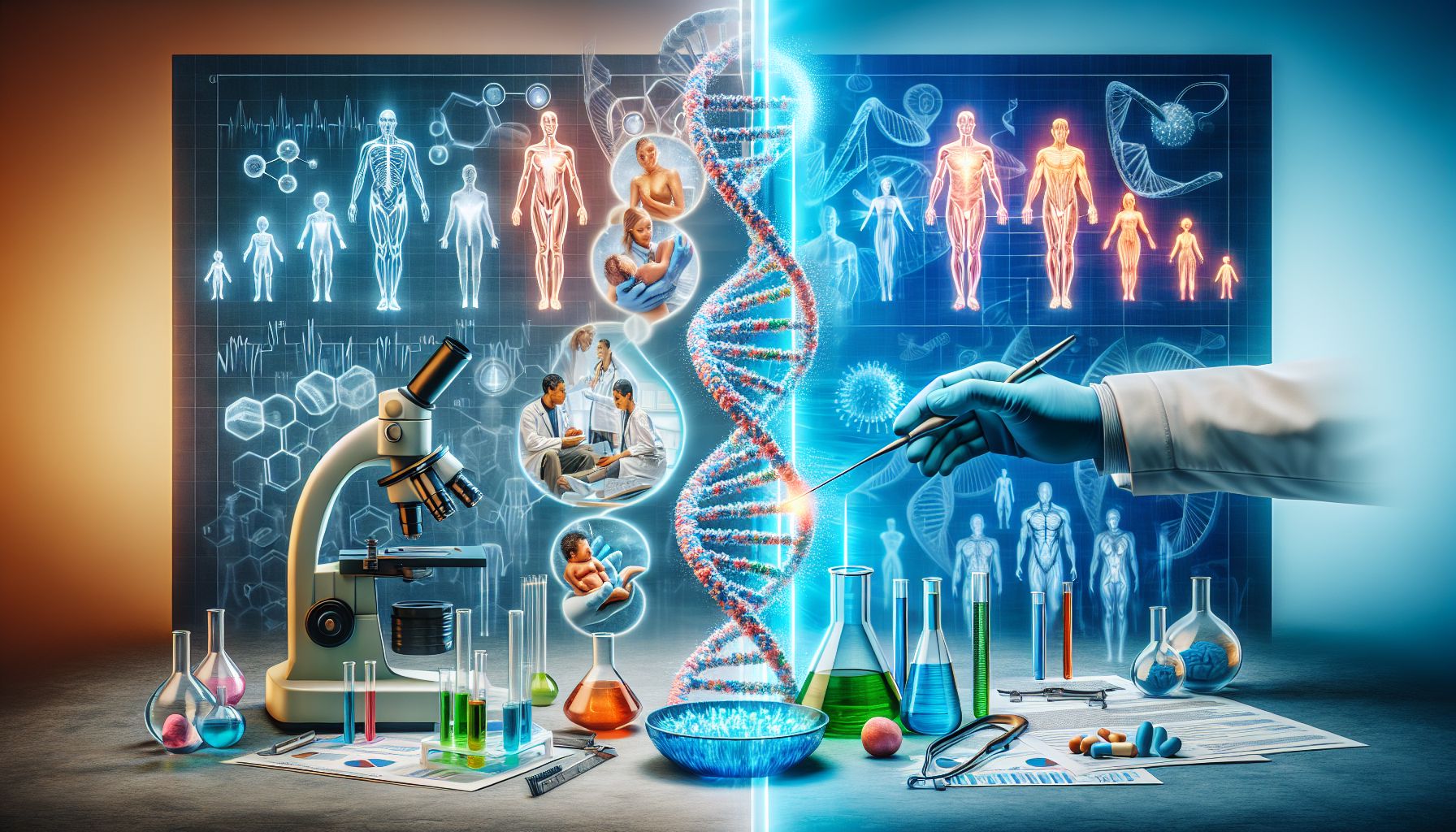
Gene Editing: Shaping the Future of Human Health
Welcome back, fellow tech aficionados! Today, we’re diving into a subject that’s straight out of science fiction but rapidly becoming our reality—gene editing. Now, the prospect of altering our genetic makeup might conjure up visions of superhero-like mastery or cinematic dystopias, but trust me, it’s way cooler and—fingers crossed—nothing sinister. Imagine a world where inherited diseases could be eradicated, life spans extended, and crops optimized to withstand harsher climates. Sounds like a techno-utopia doesn’t it? Let me break it all down for you.
The Ins and Outs of Gene Editing
Picture CRISPR as a genetic set of precision tweezers. Researchers chat about CRISPR the way a mountaineer might gush about their climbing kit—effusive and geeky. Originally discovered in bacteria, CRISPR (short for Clustered Regularly Interspaced Short Palindromic Repeats) is a powerful toolset that lets scientists snip away at the genetic code. Think of it like editing a manuscript, except the manuscript happens to be DNA.
How Does CRISPR Work?
Let me get briefly technical here, but I’ll keep it digestible. CRISPR uses a protein called Cas9 that acts like molecular scissors. It’s guided by RNA to find specific DNA sequences, sort of like using GPS to locate a particular street address. Once it finds the target, it cuts the DNA at that exact spot. Scientists can then remove the unwanted genetic material and insert new code. It’s like finding a typo in your DNA and fixing it with a cosmic word processor.
The Revolution in Health Care
The potential for CRISPR in healthcare is genuinely mind-blowing. We’re talking about diseases that have plagued humanity for centuries potentially becoming treatable or even preventable. Conditions like sickle cell anemia, Huntington’s disease, and certain types of blindness are already being targeted in clinical trials. I’ve read about patients who’ve had their lives completely transformed—people who were facing a grim prognosis suddenly finding hope.
The technology works by correcting the genetic mutations that cause these diseases at their source. Instead of treating symptoms, doctors could potentially fix the underlying problem in a patient’s DNA. Early results from trials have been promising, though we’re still in the early stages of understanding long-term effects and safety considerations.
What excites me most is how this could change the game for rare genetic disorders that affect small populations. These conditions often don’t get much research attention because there’s limited commercial incentive. But CRISPR’s precision and versatility mean it could be adapted to treat diseases that currently have no options at all.
Where’s This Train Headed?
Looking ahead, gene editing could reshape medicine in ways we’re just starting to grasp. Beyond treating existing diseases, researchers are exploring whether we could prevent genetic conditions before they develop. There’s also fascinating work happening in agriculture, where CRISPR is being used to create crops that are more nutritious, drought-resistant, or longer-lasting.
Speed Bumps on the Road
But let’s be real—this technology isn’t without its challenges and controversies. The ethical questions alone are enough to make your head spin. Should we be editing human embryos? What about enhancement versus treatment? Where do we draw the line between fixing genetic diseases and creating “designer babies”?
There are also practical hurdles. The technology, while precise, isn’t perfect. Off-target effects—where CRISPR accidentally cuts the wrong part of DNA—are still a concern. The cost and complexity of treatments mean access could be limited to those who can afford it, potentially creating new forms of inequality.
Regulatory frameworks are struggling to keep up with the pace of scientific advancement. Different countries have different rules, and the international coordination needed for responsible development is still evolving. It’s a delicate balance between encouraging innovation and ensuring safety.