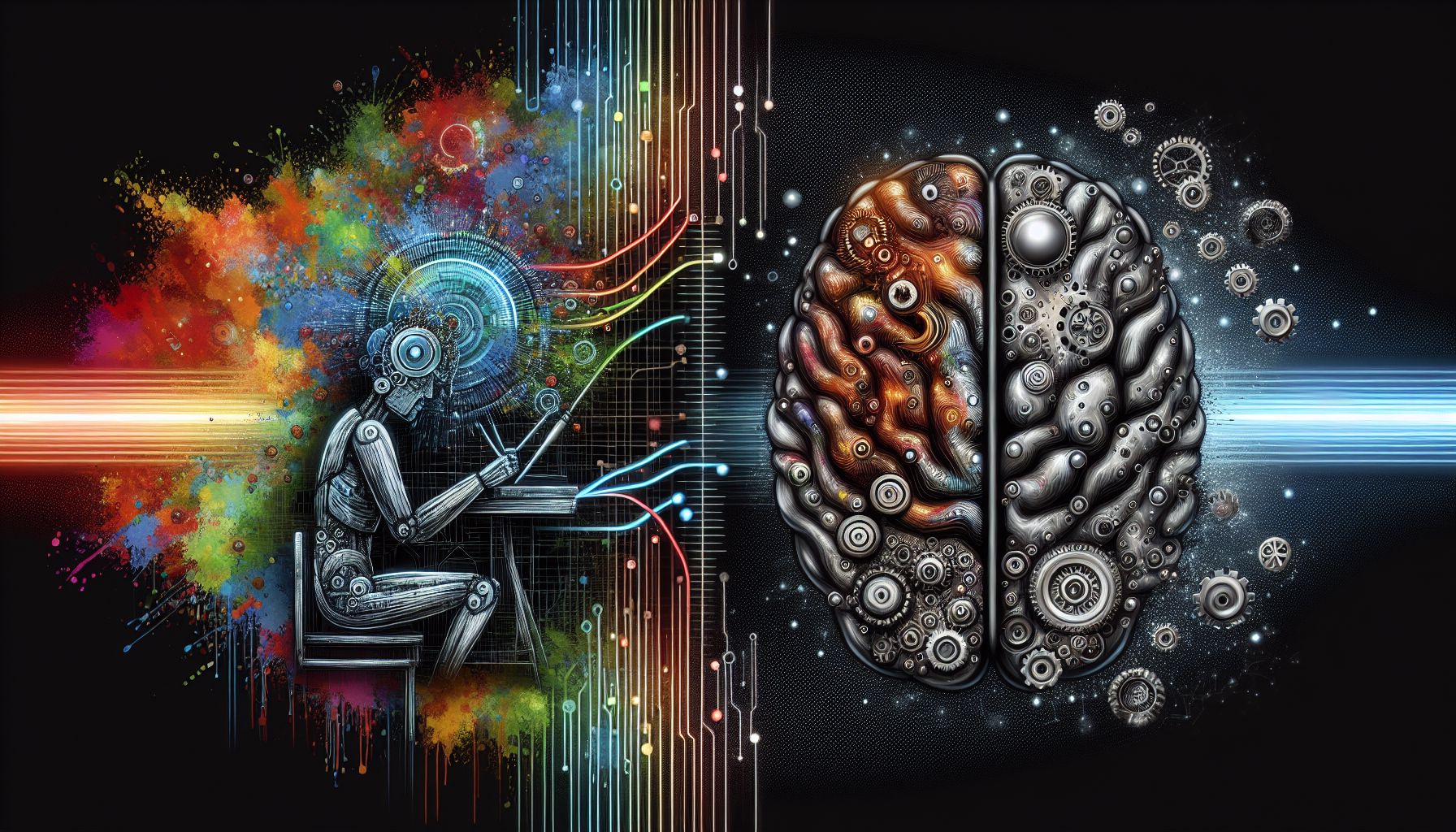
Don’t Call It a Revolution: How AI Is Redefining Creativity
The creative world ain’t what it used to be, folks. You didn’t just dip your toes into 2023 expecting brushstrokes and Beethoven to stay unrivaled, did you? Nope, the future’s canvas has a surprise collaborator: Artificial Intelligence. And trust me, it’s here to shake things up.
The Rise of Algorithms With a Creative Flair
When thinking of Van Gogh and Picasso, the last thing that usually follows is an “AI generated this piece” caption. Yet, these non-human creatives are constantly throwing a curveball in the arts sphere. By “curveball,” I literally mean there are painting robots — no, really! They’ve got brush hooks and all, throwing colors around like it’s Toy Story for art tools.
Remember OpenAI’s DALL-E, the AI program that generated surreal-mashup images? Like a walrus drinking coffee in a café called Espresso Not Impress-Oh (if that’s not meme-worthy, I don’t know what is)? Thanks to geniuses tinkering in white labs and snacks that fuel insomnia-driven coding sessions, the lights on AI artists aren’t dimming anytime soon. Creativity gets another flavor — tech-infused! It’s like adding ranch to pizza. Not everyone likes it, but, boy, does it make waves.
Robots As Bandmates: The Noise We Didn’t See Coming
Grab headphones because here’s where your brain starts wiring reality with techno wonderland. AI machines are busting out solos programmed to mimic the soul of Jimi Hendrix’s guitar riffs or Beethoven’s symphonies. And they’re not just remixing tunes of the ethereal class: they’re composing original music. Some AI projects are dropping beats my human ears didn’t know they wanted, but couldn’t stop vibing with after… whether that’s wondrous or deeply concerning, your earbuds decide.
Seen that viral clip of an AI singing voice indistinguishably near legendary musicians? Surprise, it wasn’t unreleased tapes. AI can belt tunes and eventually land concert spots without hours-long soundchecks or questionable green M&M requirements. Put that in your microphone, warm-up scales. Who’s managing that encore again?
Balancing Tech with Tradition: Scratches in the Vinyl
There’s an elephant in this high-tech room — does this newfound AI-world actually create authentic art? Not exactly. With traditional creators protective of their role, somebody’s waving red flags like there’s an uprising brewing.
I mean, sit down for coffee with Hemingway’s boldly austere prose and try arguing it could be crafted solely by machine learning. Can computers feel hubris, longing, or heartbreak mid-sentence like self-made literary masters? I’d imagine not, since your PC lacks internal dialogue (unless it achieves sentience any day now).
Yet here’s the thing about this tech path — it’s actually revitalizing productivity for human creators. AI tools can handle the grunt work while artists focus on the bigger picture. It’s like having an assistant who never needs coffee breaks and doesn’t judge your 3 AM creative bursts. The real magic happens when humans and machines work together, not when one tries to replace the other.
AI Muses: Way Beyond Human vs Computer
The most interesting development isn’t AI replacing human creativity, but AI becoming a new kind of creative partner. Think about it — writers are using AI to brainstorm plot twists, musicians are collaborating with algorithms to explore new soundscapes, and visual artists are training AI on their own work to create variations they never would have thought of.
This isn’t about machines taking over. It’s about expanding what’s possible. Sure, there are legitimate concerns about authenticity and attribution. And yes, the legal landscape around AI-generated content is still a mess. But watching an artist work with an AI tool is like watching a painter discover a new pigment — suddenly there are colors on the canvas that weren’t there before.
Where Do We Go From Here?
Honestly? I think we’re still figuring it out. The creative industries are adapting faster than anyone expected, but there’s still this underlying tension between embracing new tools and preserving what makes art fundamentally human. Maybe that’s exactly where we need to be — questioning, experimenting, and refusing to let either pure tradition or blind progress win completely. The best art has always come from that kind of creative tension anyway.