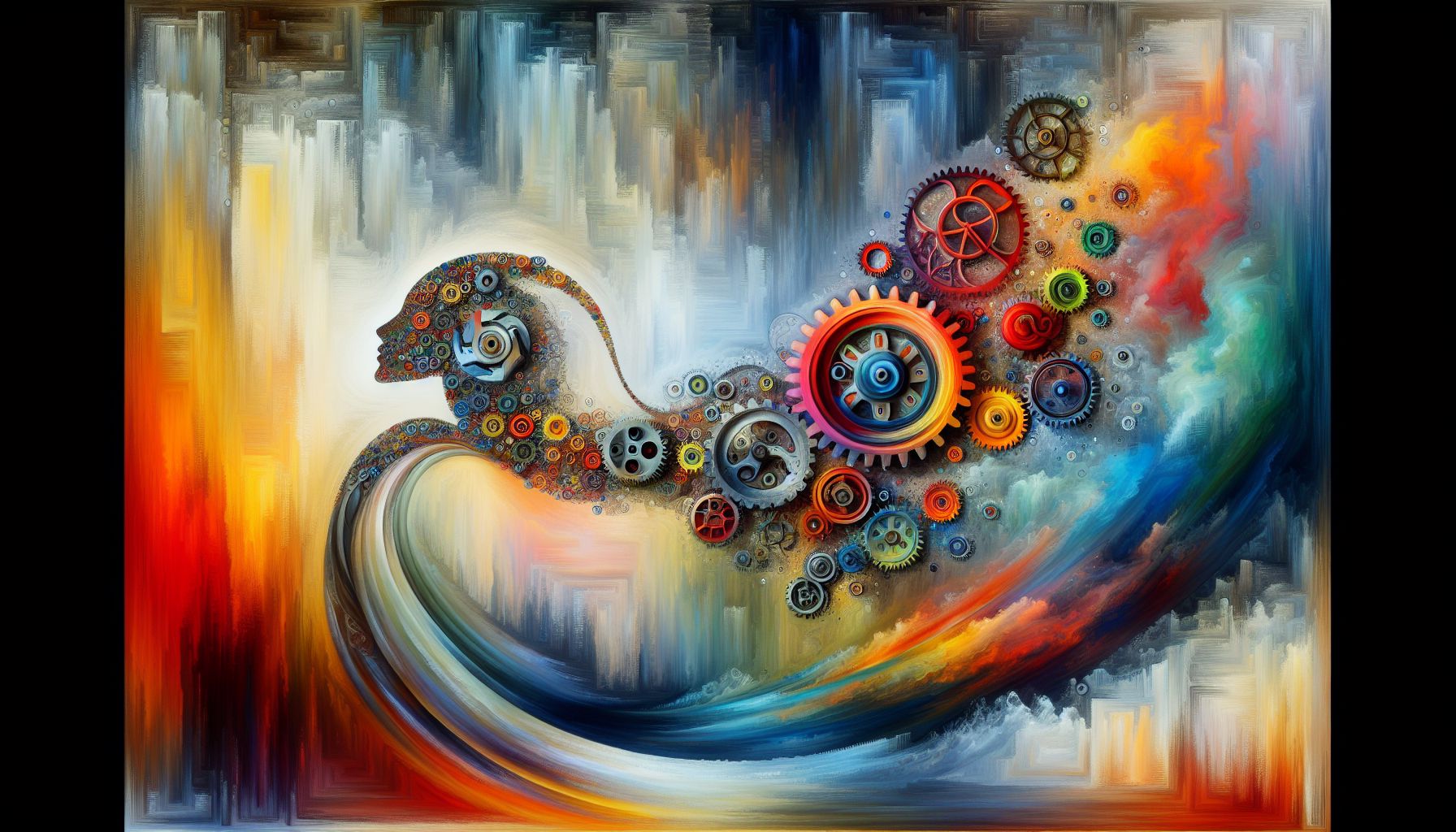
The Colorful Jig of AI in Creative Arts
Hey fellow tech enthusiasts! Today, I’m diving into something that’s making not just the digital waves a bit more colorful but also canvases, audio tracks, and beyond. Oh yeah, I’m talking about Artificial Intelligence in the creative arts scene. If you’re thinking paintbrush-wielding robots or melancholic songs written by an algorithm named Allen the Virtuoso, you’re only scratching the surface.
From Pixels to Paintbrushes
Let’s start with what’s been quickly getting “that can’t be real” reactions: AI-generated art. Platforms like DeepArt and NVIDIA’s AI painting systems show that we’re in the early days of bringing algorithms into art galleries.
Generators and Glitches
AI art generators use neural networks to create imagery calculated from vast collections of existing artworks. We’re talking major transformational heavy lifting, similar to Marie Kondo visiting your cluttered garage and leaving behind the Louvre. Those peculiar, often hauntingly beautiful images result from style transfer models manipulating pixels more deftly than a juggler with asymmetrically encumbered fruit.
I remember stumbling upon an Instagram account run completely by a neural network. At first, you might laugh it off as gimmicky—especially because it’s harder to take an avatar named “Bot-istique” seriously. Yet, these pieces are starting to spark real conversations about ownership and authenticity. Can a trained algorithm be praised as an artistic genius or credited with having experienced artistic nuances born out of human suffering or joy?
Canvas Revolution
What’s happening isn’t fooling anyone, and yet, we’re hungry for the evolution. When every generation steps into painting on their digital canvas versions pulled out of Adobe’s creative suite, traditional artists start paying attention. Rather than closing shop, many of them use AI to elevate their existing skills, making for some outstanding collaborations.
Software Symphony – AI the Composer?
Hold on to your earbuds. Writing music with algorithms might make centuries-old composer spirits spin in their graves, but we’re taking their time-honored genres into algorithmic territory.
Classical Meets Code
AI-driven music means next-gen compositions unfold from systems like OpenAI’s music tools, dropping Bach-inspired notes on summer music festivals. Musicians like Taryn Southern—you might’ve caught her hybrid electronic LP—craft complex melodies tweaked from carefully optimized presets that used to require manual work.
Where traditional approaches sometimes feel stale, AI remixes energize as ambient noise artists and chamber orchestras join forces. It’s pure creative fusion—sort of like Shiva meets the Philharmonic—and honestly, the results can be pretty wild. The twist is just how natural these digital collaborations are becoming in every garage and home studio.
Creative Boundaries and Real Limitations
AI-driven creativity has its coding chops, but it’s not some magic solution. While it can inform concepts that drive human artistic expression, it’s still figuring out the deeper questions. And scaling these tools? That brings its own headaches.
Setting the Ground Rules
Copyright issues lurk around every corner. We’re dealing with research limitations plus cultural throwbacks that make things messy. It’s complicated—imagine trying to figure out if a Rembrandt-style AI painting owns its inspiration.
The legal landscape around AI-generated content is still being written. Who owns a song when the melody comes from an algorithm trained on millions of existing tracks? These questions don’t have clean answers yet, and that uncertainty makes both artists and platforms nervous.
But here’s what I find fascinating: despite all the technical and legal hurdles, creative professionals keep pushing forward. They’re not waiting for perfect solutions—they’re experimenting, learning, and creating new forms of art that couldn’t exist without these tools.
What This Actually Means
AI in creative arts isn’t replacing human creativity—it’s becoming another tool in the artist’s toolkit. Think of it like when digital photography didn’t kill film photography but created new possibilities. Some purists resisted, others embraced it, and the art world became richer for having both options.
The most exciting developments happen when human intuition guides AI capabilities. Musicians use AI to generate backing tracks they’d never think of on their own. Visual artists let algorithms suggest color palettes that push their work in unexpected directions. Writers collaborate with language models to break through creative blocks.
Sure, there are still plenty of awkward AI-generated pieces that feel soulless or just plain weird. But the gap between “obviously AI-made” and “genuinely compelling” keeps shrinking. That’s what makes this space so interesting to watch right now.