The Death and Resurrection of the Recording Studio: How Bedroom Pop Rewrote Music’s Rulebook
The Last Days of Big Studio Tyranny
The traditional recording studio died sometime around 2020, though nobody bothered to hold a funeral. Its demise was quiet, dignified even. No dramatic collapse or industry scandal ended it all. Instead, bedroom producers with laptops and USB microphones simply stopped needing what studios offered.
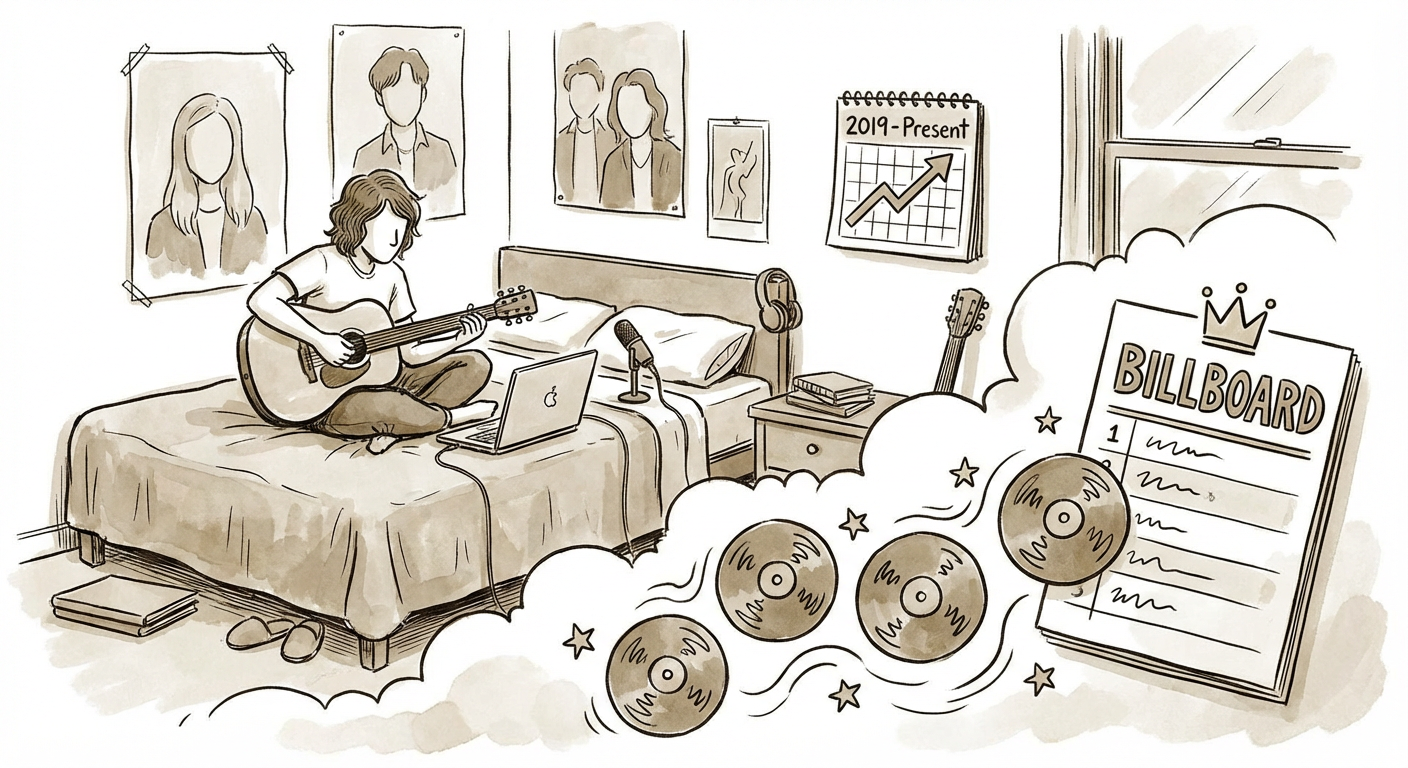
By 2025, seventy percent of tracks uploaded to Spotify came from home recording setups. Abbey Road and Electric Lady still exist, but they mostly see major-label artists and nostalgia tourists now. The real action moved into spare bedrooms, walk-in closets, and dorm rooms with nothing more than digital audio workstations and determination.
This shift is more than just technological convenience. We’re witnessing the complete democratization of music creation. A teenager in suburban Ohio now has the same sonic tools once reserved for platinum-selling acts. The gatekeepers who controlled access to professional-grade recording equipment? Bedroom producers with affordable software just walked right past them.
When Software Became the Great Equalizer
Digital audio workstations did what decades of music industry reform couldn’t: they wiped out the financial barriers to professional-quality production. Ableton Live, FL Studio, and Logic Pro turned bedroom walls into studio monitors and kitchen tables into mixing boards. What once cost tens of thousands of dollars now costs less than a decent guitar.
The learning curve flattened alongside the costs. YouTube tutorials replaced expensive engineering degrees. Online forums took the place of mentorship under grizzled studio veterans. Sound on Sound production guides became sacred texts for a generation that learned compression ratios before chord progressions.
This accessibility birthed bedroom pop, a genre that wore its lo-fi origins as a badge of honor. The slightly muffled vocals, the tape saturation plugins, the deliberately imperfect drum programming became aesthetic choices, not technical compromises. What started as necessity became artistic statement.
The Unexpected Commercial Victory
Bedroom pop was supposed to stay underground. Critics dismissed it as amateur hour masquerading as artistry. Major labels ignored it as unprofessional navel-gazing. Yet since 2019, bedroom pop artists have consistently hit Billboard charts, proving that polish and professionalism matter less than authenticity and emotional connection.
The genre’s commercial success revealed something deeper about listener preferences. Audiences gravitated toward the intimate imperfections of bedroom recordings over the sterile precision of major-label productions. The warm hiss of analog emulation plugins felt more human than the cold clarity of professional studios. Vulnerability beat technical perfection.
Streaming platforms amplified this trend by treating all audio files equally, regardless of where they came from. A song recorded in a million-dollar facility got the same algorithmic consideration as one crafted in a college dorm. The playing field leveled completely, and bedroom producers discovered they could compete with anyone.
The New Barriers and Old Gatekeepers
As traditional production barriers crumbled, new obstacles popped up. Sample clearance costs started blocking independent artists from incorporating classic material into their work. The same democratic tools that enabled bedroom pop creation couldn’t navigate the maze of music publishing rights. Many promising tracks died in legal limbo, victims of prohibitive licensing fees that major labels absorbed as business expenses.
Meanwhile, artificial intelligence tools for stem separation enabled unauthorized remixing at crazy scales. Producers could extract individual instrument tracks from existing recordings with startling clarity, creating a gray market of uncleared samples and derivative works. The technology that promised creative liberation also threatened the intellectual property framework that sustained professional musicians.
This created a weird paradox: production became more accessible than ever, but legal production stayed expensive and complicated. Independent artists found themselves with unlimited creative power but limited legal options for using it.
The Analog Renaissance in Digital Times
Here’s what nobody saw coming: the bedroom pop revolution happened alongside vinyl’s commercial resurgence. For the third straight year in 2025, vinyl sales beat compact disc sales, suggesting that listeners craved physical artifacts even as they embraced digital creation methods. This wasn’t just nostalgia. It represented a deeper hunger for tangible connection in an increasingly virtual musical world.
Bedroom producers, raised on streaming and software, began hunting down vintage synthesizers and analog recording equipment. The same artists who celebrated lo-fi digital aesthetics started investing in expensive analog gear that their predecessors had abandoned for digital alternatives. The cycle completed itself: digital tools enabled artistic expression that ultimately yearned for analog warmth.
Pitchfork music criticism reflected this shift, running lengthy discussions of analog versus digital production techniques that would have seemed obsolete just a decade earlier. The conversation had come full circle, though on completely different terms.
The bedroom pop movement ultimately achieved something unprecedented: it proved that professional-quality music could emerge from nonprofessional environments. It showed that authenticity mattered more than credentials, that feeling trumped technique, and that the most important studio equipment was often the artist’s willingness to be vulnerable. The genre may evolve or fade, but its impact on music production culture will stick around long after the last bedroom producer graduates to a proper studio. What aspects of this democratized music creation resonate most with your own creative experiences?